
Resources · Materials
What is thermowood?
It sounds like a species and it isn't. Thermowood — properly called thermally modified timber — is ordinary wood that has been baked until it stops caring about water. That one change is why it has quietly become the best material in a sauna.
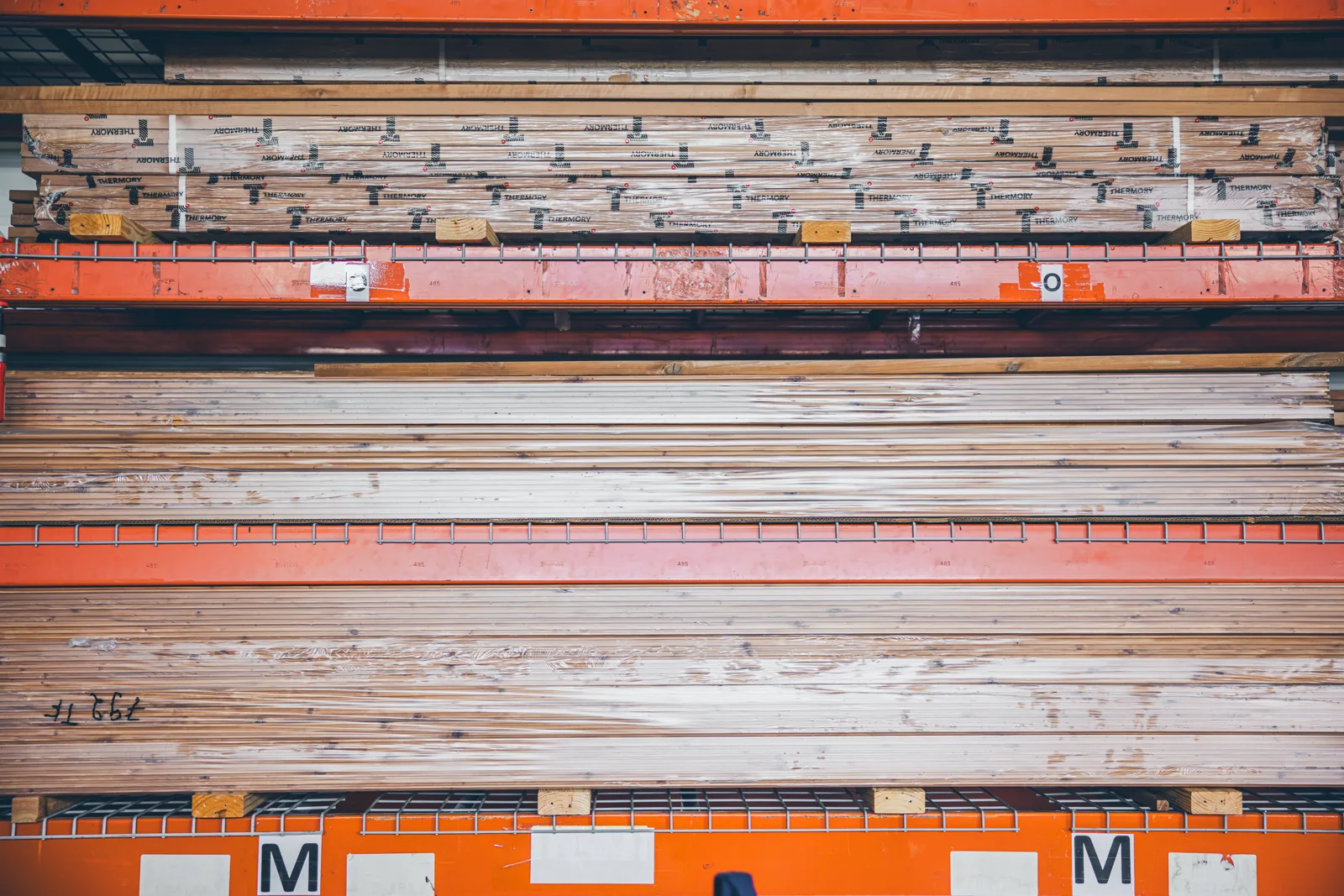
The process
How it's made
Nothing is added to the wood. Heat, steam and time do all of the work, which is why the material has no chemical story to explain.
Kiln-dry it first
Green or air-dried boards go into a sealed kiln and are dried far below their normal moisture content — down into single digits — before any real heat is applied. Water left in the cell walls would steam from the inside and crack the board.
Bake it with steam, not oxygen
The kiln is brought up to roughly 185–215 °C (365–420 °F) and held there for hours. Steam and a low-oxygen atmosphere keep the wood from igniting or charring while the heat does its work. The longer and hotter the soak, the darker and more stable the finished board.
Cool and re-condition it
The boards are cooled slowly, then re-humidified in a conditioning chamber so they settle back to a workable moisture level. Skip this and the wood is brittle and springy; do it right and it comes out relaxed and ready to mill.
What the heat permanently changed
The hemicelluloses — the sugars in the cell walls that drink water — are cooked away. Sap and resins are driven off. The lignin that holds the walls stiff partially re-bonds. None of this reverses: the board is a different material when it comes out, and the colour change runs all the way through it, not just on the surface.
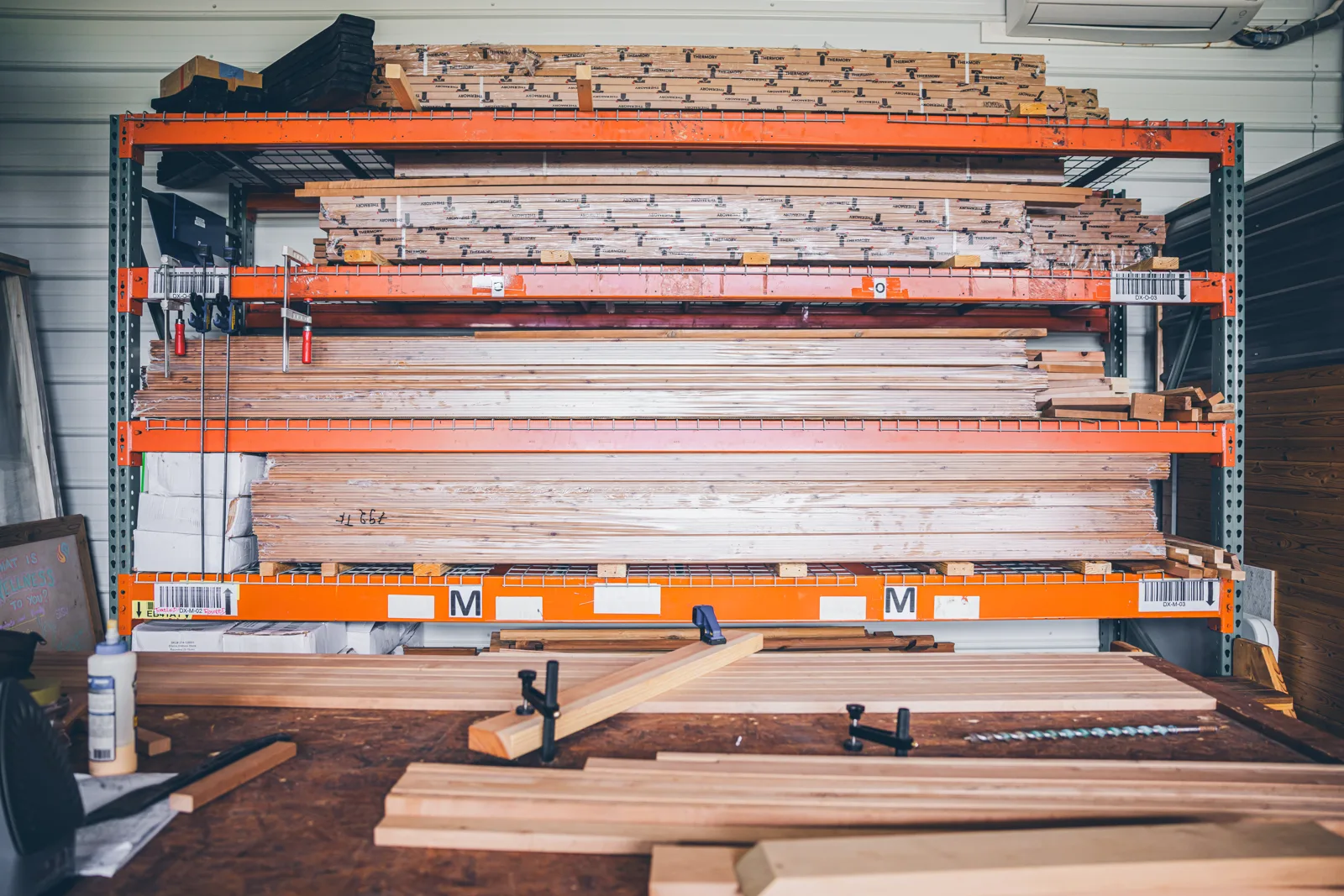
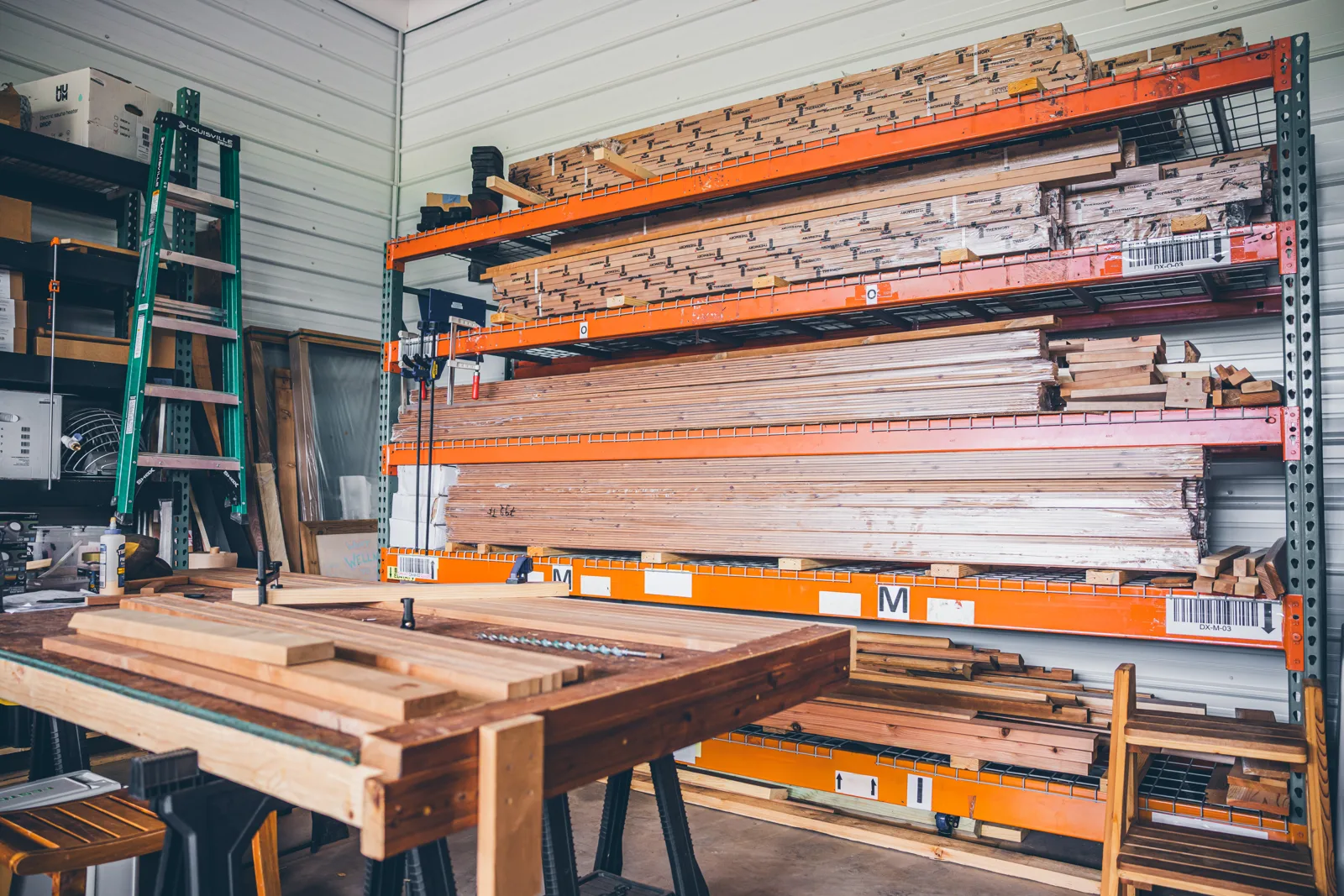
Why it belongs in a sauna
Six reasons we reach for it
It stays kind to bare skin
Thermal modification makes the wood a better insulator, so benches and backrests hold their heat instead of conducting it into your skin. You can sit closer to the heater without that sharp, scorching feel softer woods give at high temperature.
It barely moves
Because the water-hungry sugars are gone, thermowood takes up far less moisture. In a room that is flooded with löyly and then baked dry again, boards swell and shrink much less — so joints stay tight, benches don't cup and cladding doesn't open up at the seams.
No sap, no resin burns
Untreated softwoods still hold resin, and a hot sauna sweats it out — sticky droplets that can blister your skin and stain a towel. The bake drives the resins off, so the bench in front of you stays clean session after session.
Nothing chemical to breathe
There is no preservative, no stain and no glue in the process — just heat and steam. That matters in a small, hot room where you'll be breathing deeply. No volatile off-gassing, no coating breaking down on the heater stones.
It outlasts its price
Decay fungi need moisture the wood can no longer absorb, so thermally modified timber holds up in hot, wet conditions far better than the same species untreated — closer to cedar or a tropical hardwood, without reaching for an imported or threatened species.
An even, honest grain
The bake darkens the board all the way through, so a scuffed or weathered surface shows the same warm brown underneath rather than a pale scar. The grain reads calm and consistent across a wall, and it takes oil or soap treatments without blotching.
Straight answers
What it won't do
Thermowood is a specialty material, not a better-than-everything wood. These are the trade-offs we plan around on every build.
- It's more brittle than the same wood untreated — bending strength and hardness drop, so thermowood belongs on benches, ceilings and cladding, never on structural framing, stairs or load-bearing members.
- It machines dusty and dulls blades faster; edges want pre-drilling and a sharp, carbide-tipped saw rather than brute force.
- It isn't ground-contact material. Keep it above a drainable base and let air move under it.
- Left outdoors and unfinished, UV turns it silvery grey. That's honest weathering, not failure — but if you want the brown to hold, it needs an outdoor oil and a periodic coat.
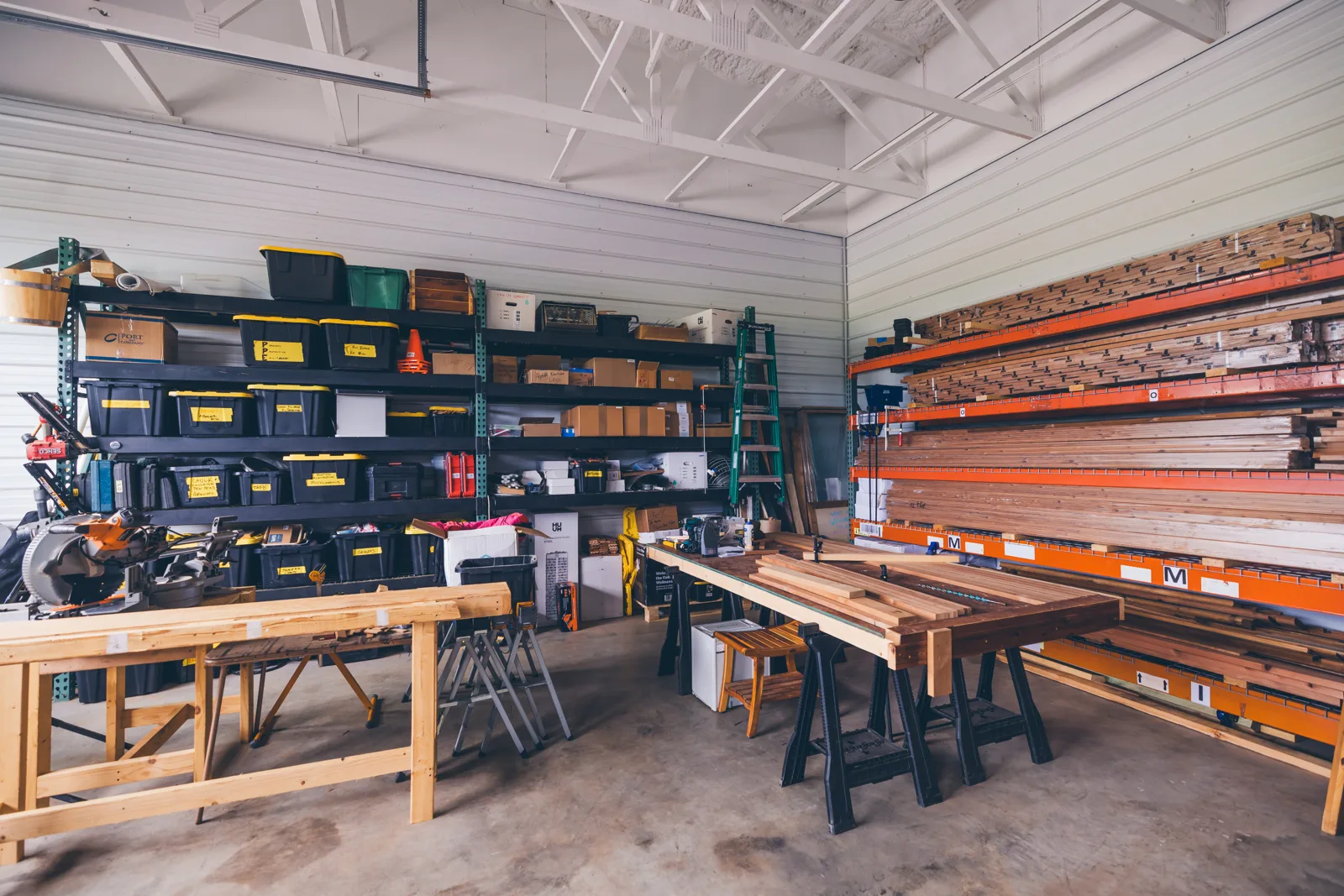
Where the material gets sorted, numbered and cut
Living with it
- Rinse benches with water and let the room dry out fully with the door open after each session — the drying is what protects the wood.
- Skip soap on the benches where you can; a dry brush or a damp cloth is usually enough. Build-up is what makes a bench feel tacky, not the wood.
- Once or twice a season, sand a bench lightly and re-oil if you want the deep brown kept. Left alone, indoor thermowood simply settles to a softer tone.
Sit in it before you buy it
Photos can't tell you how a bench feels at 85 °C. Our Springdale showroom can — step inside full-size builds and compare benches side by side.